Trucking / Transportation
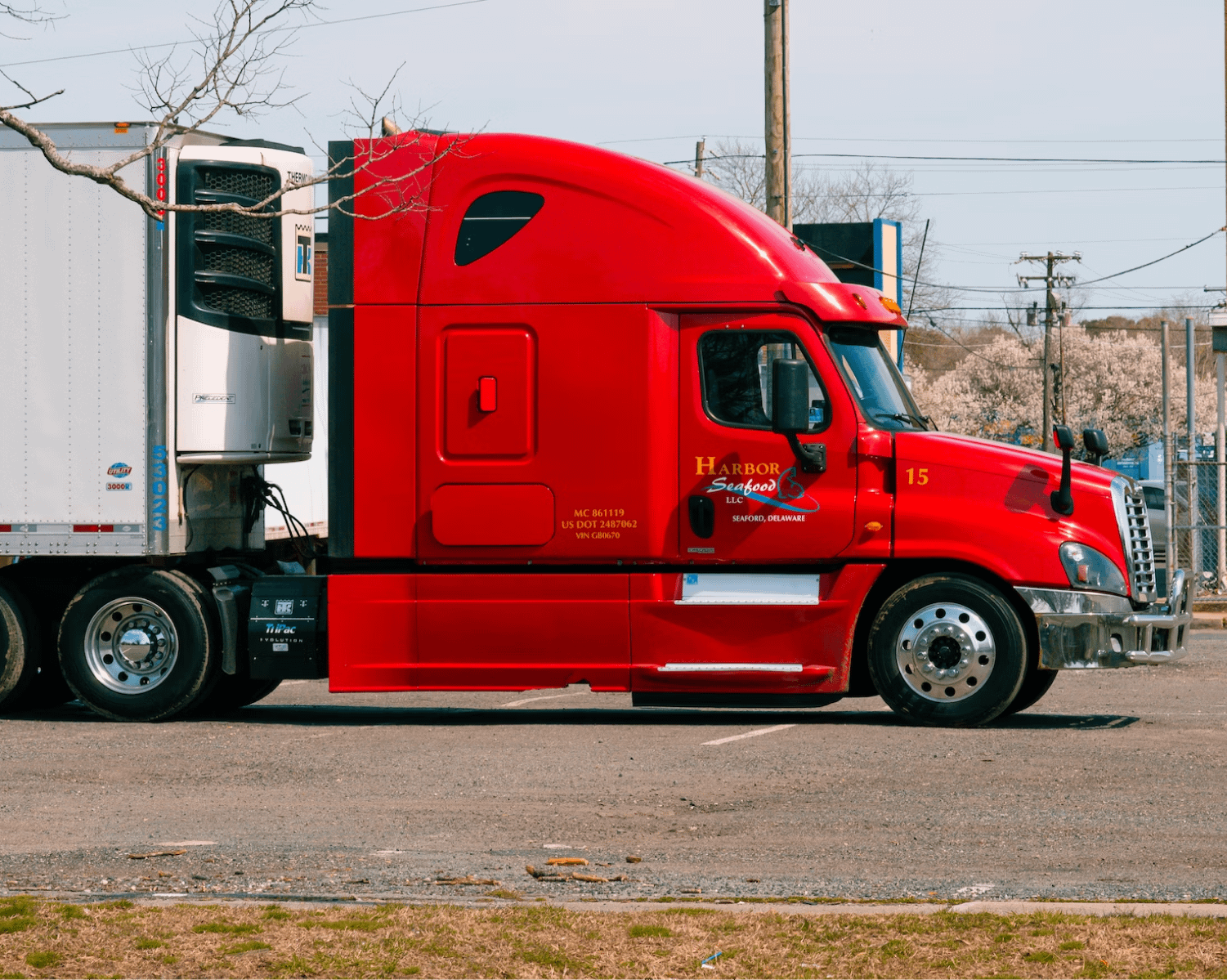
Fleet & Truck Wash Equipment for Transportation Operations
Truck fleets don’t buy pressure washers because clean equipment looks better. They buy them because a wash schedule has to happen on top of everything else the yard does — and the equipment either keeps up with the fleet count or it doesn’t.
We supply and service fleet washing systems for transportation operations across Northeast and North Central Florida: fixed wash bays, mobile units, and the chemistry and service that keep both running.
What Transportation Fleets Actually Wash
Tractors, trailers, and box trucks. The daily volume, and the reason throughput — GPM and coverage — usually decides the specification before peak PSI does.
Dump trucks, tankers, and heavy equipment. Tougher soils, more access problems, and often a need for hot water.
Trailer interiors and washouts. Dry vans, reefers, and bulk trailers washed between loads. Food-grade and dry-bulk service each require different chemistry and documentation.
Yard and shop equipment. Yard tractors, forklifts, service trucks, and the equipment that keeps the yard moving.
Facilities and grounds. Fuel islands, maintenance-shop floors, and yard surfaces where oil and fuel staining accumulate.
Fixed Wash Bay or Mobile Unit?
A fixed bay wins when volume is steady, a drain and containment exist, and vehicles come to one place. It usually means higher GPM, hot water, and a permanent containment solution.
A mobile or trailer-mounted unit wins when the fleet is split across sites, when there’s no usable water or power at the wash point, or when washing is squeezed into windows between dispatch — which describes a lot of transportation operations.
Most fleets end up with one of each: a bay for the standard schedule, and a mobile unit for overflow, remote sites, and equipment that can’t be driven to the bay. Our trailer-mounted systems page covers the mobile side in detail, and our wash bay design guide covers the fixed side.
Sizing to Fleet Count, Not to the Biggest Machine
The arithmetic that matters is throughput per shift. A single-gun operator washing a tractor-trailer typically takes 20 to 40 minutes depending on soil and method, so one operator on one gun covers roughly one and a half to three units an hour — and that’s the number to multiply by your fleet count.
Three variables move it:
- GPM and gun count. Two operators with two guns and adequate flow is far more than the same machine with one gun. This changes the pump and water supply spec.
- Heat and chemistry. Hot water plus the right detergent shortens dwell and rinse time on the oily soils that dominate fleet exteriors.
- Water supply and containment. A machine can’t deliver more flow than it’s fed, and every gallon of wash water has to go somewhere. Both limits bite before you reach the machine’s rating.
Our sizing guide has the flow, nozzle, and heat arithmetic.
Water, Containment, and Wash-Water Rules
Fleet washing generates wastewater carrying oil, grease, suspended solids, heavy metals, and detergents. Under Florida DEP guidance for vehicle and equipment washing:
- Discharge to a sanitary sewer is generally preferred and requires prior approval from the wastewater utility, possibly with pretreatment
- Contain and haul to a permitted facility is the alternative
- Discharge to land only when treated to prevent groundwater pollution
- Wash on an impermeable surface and designate a cleaning area away from storm drains, repair areas, and chemical storage
- Use high-pressure, low-volume methods to reduce the volume generated
- Use phosphate-free biodegradable detergents, per DEP’s BMP recommendation
Water reclaim and recycling systems are worth evaluating once volume is high enough that water handling becomes a real cost. If you’re planning a bay, involve us before the containment and drainage are final — retrofitting either is expensive.
Equipment We Recommend by Application
| Application | Typical configuration |
|---|---|
| Daily tractor-trailer washing in a bay | High-GPM hot water, surface cleaner attachment, two-gun capable |
| Mixed fleet with heavy equipment | Hot water, higher pressure for equipment, chemistry matched per soil |
| Trailer interior and washout work | Application-specific chemistry; a documented disposal route |
| Multiple yards or remote sites | Trailer-mounted unit with onboard water, engine drive |
| Fuel islands and shop floors | Hot water with degreaser, floor-cleaning attachments |
| Yard and grounds surfaces | High-GPM hot water with a surface cleaner |
Chemistry for Fleet Washing
Fleet exteriors are a road-film problem: a mix of dirt, oil, diesel soot, and brake dust bonded to paint and metal. The right detergent with the right dwell time does most of the work, and hot water cuts the rest. Two cautions worth stating plainly:
- Acid-based brighteners are a specialty product with real hazards. They etch concrete, they’re aggressive on skin and lungs, and they are not a general-purpose fleet soap. If brightening is part of your process, handle it deliberately and follow the label.
- Chemistry choice is a compliance input, not just a cleaning one. Phosphate-free biodegradable detergents are what DEP’s BMPs recommend, and they’re what we supply through our cleaning chemicals line.
Our degreaser and detergent selection guide covers matching chemistry to soil type.
Service for Fleet Equipment
Fleet machines run hard and can’t be down. We service what we sell — burner, coil, pump, and unloader — onsite or drop-off at our Jacksonville shop, and we put high-volume operations on tracked maintenance schedules rather than emergency repairs. Our maintenance checklist covers what operators can handle between visits.
Frequently Asked Questions
How much pressure do I need for fleet washing?
Less than most people assume. Commercial fleet washing generally sits around 3,000–4,000 PSI, and coverage — GPM — usually improves production more than extra pressure. Higher pressure mainly risks damage to paint, decals, and aluminum.
One gun or two?
Two guns substantially increase throughput per hour, but require the pump, burner, and water supply to be sized for combined flow. Retro-fitting a second gun to a machine spec’d for one is how pumps die early.
Do we need a wash bay, or can we wash in the yard?
Both are workable, but the yard approach still needs a plan for where the water goes. Florida DEP guidance expects wash water to be managed — containment to a sanitary sewer with approval, or containment and haul-off.
Can you wash trailer interiors with a pressure washer?
Interiors and bulk washouts need application-specific chemistry and a documented disposal route, and food-grade versus dry-bulk service differ. Tell us what you haul and we’ll work backward to the chemistry and the plan.
Can you service a fleet wash system at our yard?
Yes — onsite across Duval, Clay, St. Johns, Putnam, Marion, Alachua, and Columbia counties, or drop-off at our Jacksonville shop.
Let’s Spec Your Fleet Wash Setup
Tell us how many units per shift, what’s in the fleet, where the water goes, and how many operators you can put on guns. We’ll size the machine, the water supply, and the chemistry to the schedule you actually run.
Call (904) 693-2155 or request a quote. Sun Pro Supply is the exclusive authorized Hotsy dealer for Duval, Clay, St. Johns, Putnam, Marion, Alachua, and Columbia counties, and an authorized retail and repair center for Ramteq and other major commercial brands.